
Dr. Samuel Gandang Gunanto, S.Kom., M.T.., lecturer in the Animation Study Program (Prodi), Faculty of Recording Media Arts (FSMR) ISI Yogyakarta on Thursday, October 8, 2020 was a guest speaker in the "Techno Week Series" webinar held online together with Adhicipta R. Wirawan, a lecturer from UBAYA Surabaya.
The webinar is a program of P4TK TK and PLB in 2020, with the theme "Game Based Learning for More Meaningful Learning". The event discussed a lot about the potential of learning with the hope that our students will feel comfortable and feel happy with the concept of learning applied by playing methods, especially during this pandemic. Starting with an introduction from the Head of P4TK TK and PLB, Mr. Drs. Abu Khaer, M.Pd. who explained that the essence of learning is the interaction of all-way communication.
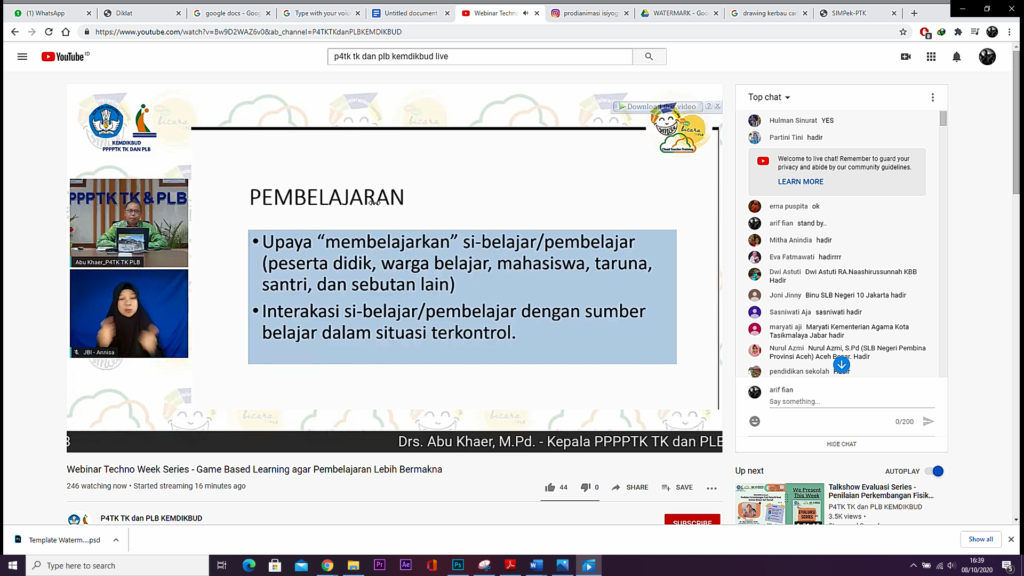
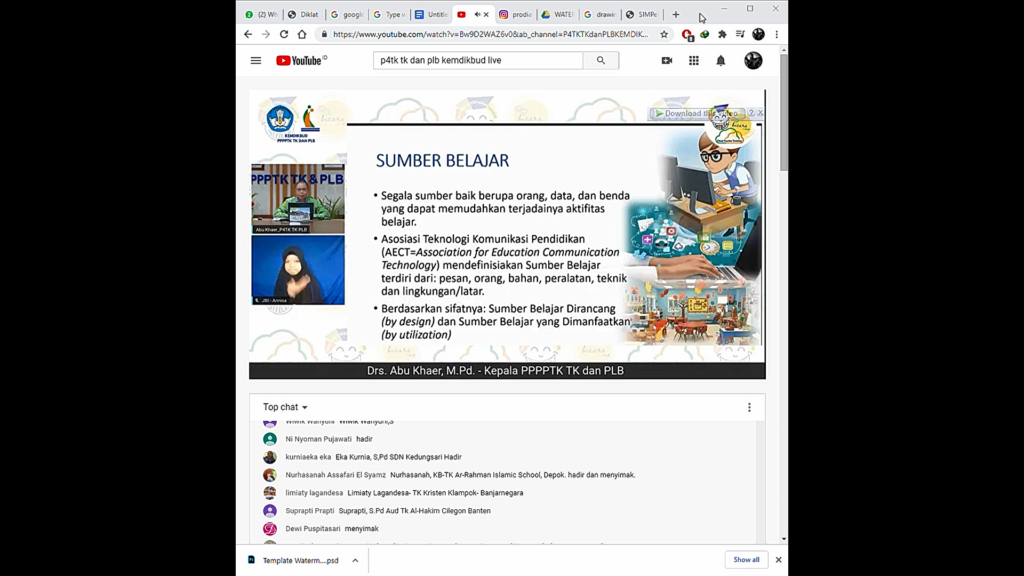
Presentation of material from Drs. Abu Khaer, M.Pd in the webinar "Game Based Learning for More Meaningful Learning" (8/10).
In the past seven months, many good practices have become an effort by educators or creators to find interesting learning formulas and packaged with a number of games that can certainly be easily obtained some learning materials.
Innovations during this pandemic have produced several learning strategies that use educational systems, especially learning programs based on information and communication technology can be juxtaposed and can be combined into a learning strategy that is blended learning.
The moderator of the "Techno Week Series" webinar was Muhammad Roland Zakaria from the "Kelas Bersama" community. Dr. Samuel Gandang Gunanto, S.Kom., M.T. as the first presenter presented the material entitled "Games as Independent Learning Media during the Pandemic".
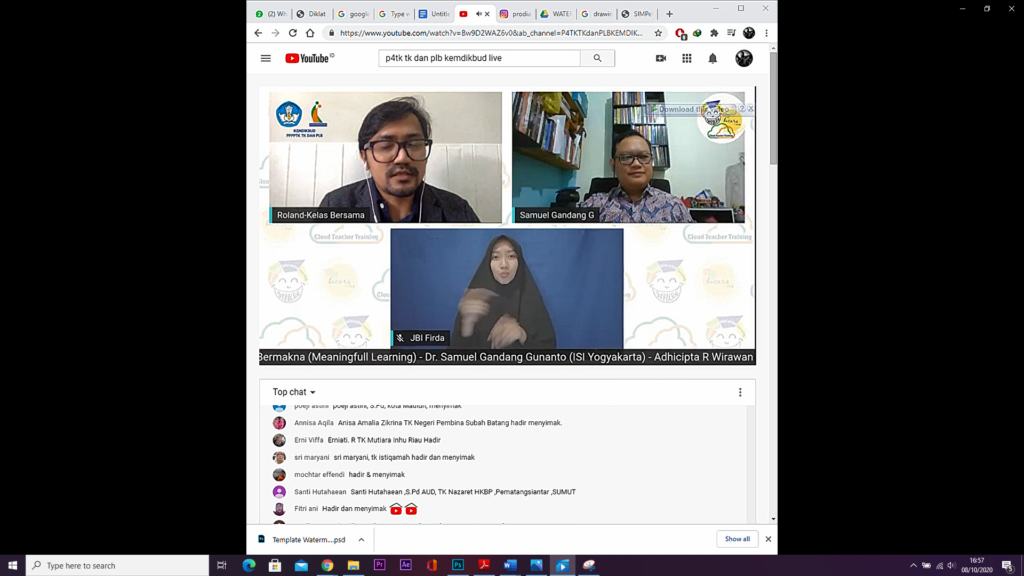
Before starting the material to be presented, Dr. Samuel Gandang Gunanto, S.Kom., M.T. conveyed the need for a common perception about game, "game if translated into Indonesian is a game, but usually game It's voluntary, so the player doesn't feel forced but instead the player feels entertained and enjoys the activity", he said shortly before the presentation.
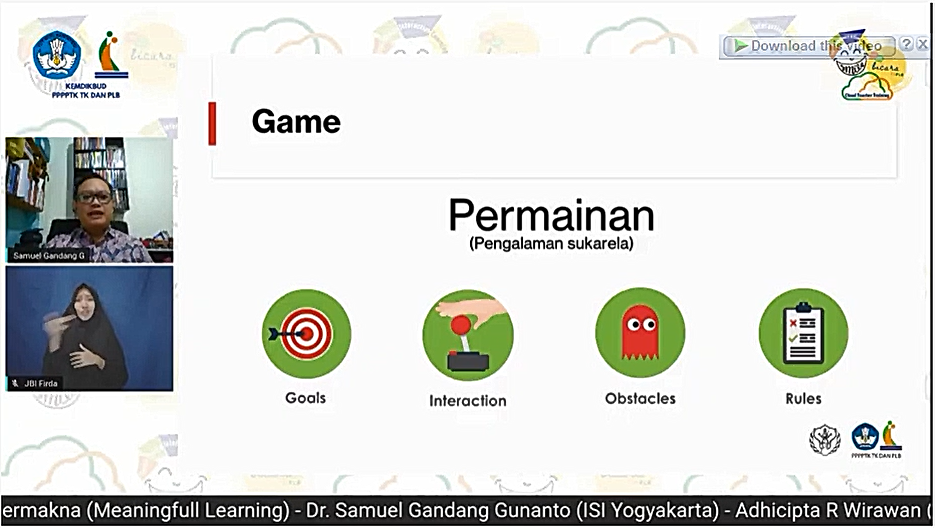
Some components that can be categorized in making game :
- Must have a target or Goals.
- Existence Interaction There is interaction between the player and the companion or character in the game or among other players if the game is played collaboratively.
- With the presence of Obstacle This can mean an enemy in the game or it can mean an obstacle that allows you to increase your knowledge.
- Existence Rules or the existence of rules that govern the game running properly.
So, these four components are the basic components in making a game.
Goals aims to determine the main goal of the game (how to win a game) and generate the following reward on a Primary Goals. But there are also Goals which is the second level or Secondary Goals, it is usually in a game that has level–level 1,2 and 3, namely how to go up. level. Meanwhile Interaction, associated with game based learning It can be categorized by the use of buttons, the use of Joystick, usage Touch screen, the use of cameras (AR-based...Augmented Reality), the use of dice, to the space interacting with sound so that it can control sound, the use of gesture ( leap motion, VR), and what is now being developed or the latest at this time is the use of Brain Controller.
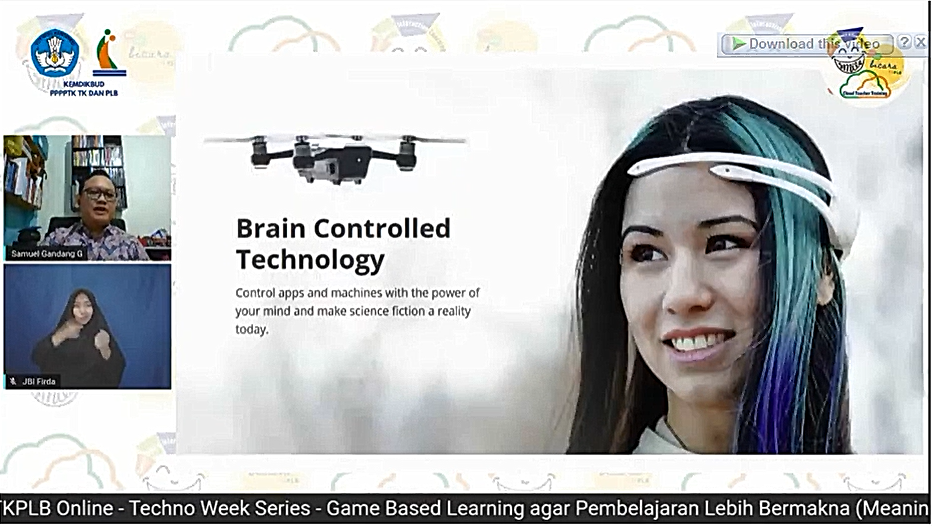
Obstacles is a challenge in the game, it can be a deliberately created obstacle in the game or as a trigger for the audience to play an active role. So obstacles This is not just an enemy (enemy) but it can also be implicit and explicit in the game, so if obstacles-is trigger (triggers) it falls into the implicit category and if obstacles-is enemy (enemy) that falls into the explicit category.
RulesIn addition, there are game rules (age requirements) because this age restriction is very important. This is generally not given enough attention to age issues, for example game for adults is played by children. So from publisher itself, game When produced or disseminated, it already has rules even down to specific requirements so that players get an understanding of the prerequisites for being able to play the game. game Then secondly, what is allowed and what is not allowed for the player. Then secondly, what is allowed and what is not allowed for players. There are also rules about the boundaries of the game area, so the player only plays following the existing scenario so that the game is more directed. In rules or game rules that describe the conditions under which a player is declared a winner or loser (Win or Lose).
These provisions can certainly attract students, so that students will feel involved. Student involvement in a game or game based learning This should take into account three components, namely:
- Affective, students recognize, students feel safe, students feel involved. That students play as characters and environments in game this feels recognizable, because usually game tends to be contextualized like the game 'Harvest Moon' which introduces the game by behaving as it would in society.
- Cognitive, students feel curious, interested, students know its usefulness, want to feel more knowledgeable. These are indicators that the cognitive side of students is also awakened.
- Behaviorally, students want to do it, take responsibility for their decisions, and want to always follow. The indicator that is built is that students try to duplicate what is played based on daily behavior, for example, by helping parents or other people, they will get a reward. reward or point certain. Then, when playing game the student feels responsible or finds a sense of Critical Thinking to decide something. Thus, the student feels that he/she wants to know more about what is learned in the lesson. game based learning This.
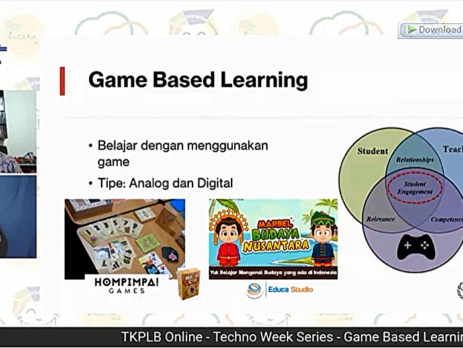
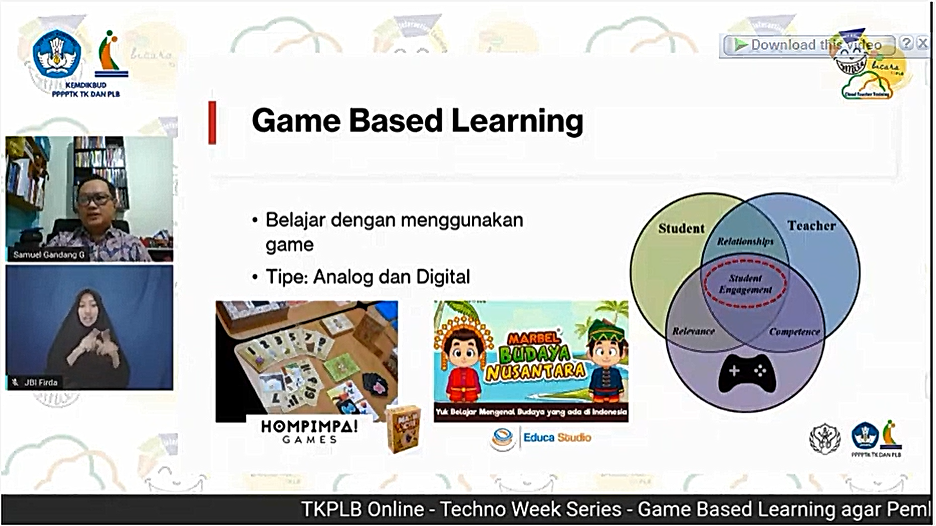
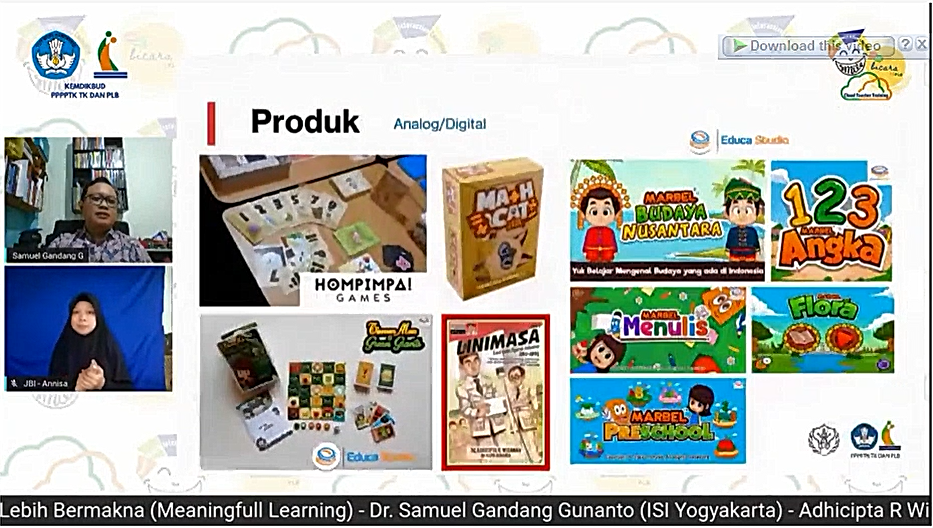
Game Based Learning is simply learning by using game. Typical-They vary, some are analog and some are digital. For example in typical analog is a product of Hompimpa Games and the digital one is a product of Educa Studio.
Meaningful Learning
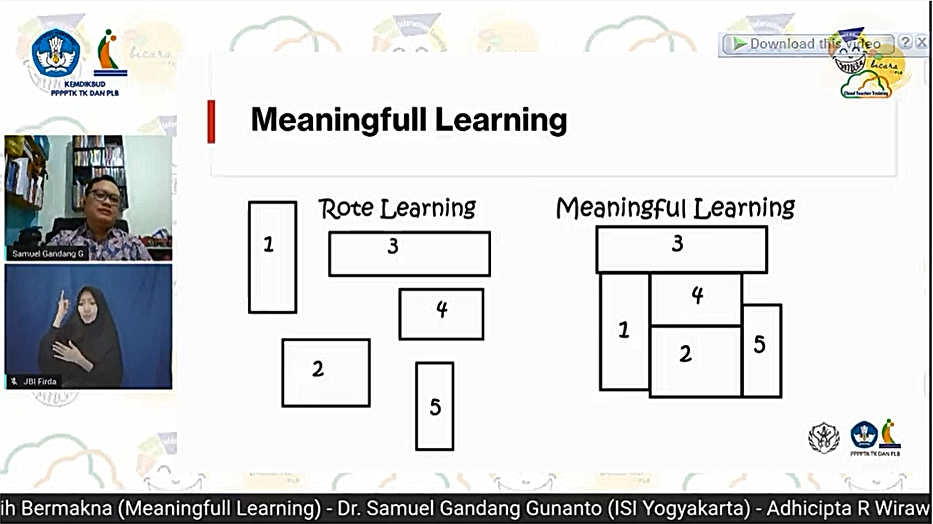
In this case, the activity carried out is learning like we memorize. In learning to memorize all knowledge concepts we learn separately as well:
- Rote LearningWe learn all the components and memorize them in order to understand each one.
- Meaningful Learning, When we implement more meaningful learning we must have a concept where all the knowledge is interrelated.
Meaningful Learning is very much in line with the current curriculum development, which is thematic. Thematic tries to bring what used to be rote to contextually experienced by children now, so that it becomes a link between subjects to become more meaningful learning.
These elements are supported by the theory Zone of Proximal Development (ZPD), in the zone of proximal development we try to provide learning to learners or to students who have proximity to their current condition. In this zone, learners will need help. In this case the educators will assist the students. In other words, with the Tools who will accompany the player and as in game based learning, tools will be scaffolding or scaffolding for participants who want to play can develop into the zone of proximal development, after occupying the ZPD area will then form a new ZPD area with the development of children that will certainly be different.
At the end of his presentation, Dr. Samuel Gandang Gunanto, S.Kom., M.T. hoped that the constructive learning system will really help students to have a personification of how they learn. So, the learning speed of students will vary but it will be more effective, will feel more involved and it will be adopted by non-conventional lessons such as game. This is what supports constructivism learning with the ZPD concept so that learning is more meaningful.


 EN
EN  ID
ID